Banquette seating plays a critical role in hotel and high-end restaurant projects.
It is not only a seating solution, but also a space-planning tool that affects guest flow, comfort, capacity, and long-term maintenance.
From a hotel furniture manufacturing perspective, successful banquette seating depends on clear layout logic, correct dimensions, and production-ready design decisions.
This guide explains banquette seating for hotel projects, combining layout strategy, construction knowledge, and manufacturing considerations.
1.What Is Banquette Seating?
Banquette seating is a type of fixed seating installed along walls, windows, or partitions. It usually takes the form of a long upholstered bench paired with dining tables.
In hotels, restaurants, and cafés, banquette seating helps use space more efficiently while offering guests a more comfortable and defined seating area. Compared with loose chairs, banquettes provide better support and a stronger sense of enclosure.
2. Common Banquette Seating Layout Types
In high-end restaurant design, loose seating is often placed near entrances to keep circulation clear, while banquette seating is arranged along walls or in corners to maximise space and create a more private dining atmosphere.
Wall-aligned straight banquettes are the most space-efficient solution. Installed directly against walls, they do not interrupt circulation paths and make full use of corners and unused wall lengths. This layout is easy to produce, simple to install, and cost-effective, making it a common choice for hotel restaurants and cafés where clarity and efficiency are key.
Face-to-face double banquettes place two seating runs opposite each other with a table in between. This configuration creates a lively, social dining atmosphere and encourages longer guest stays. It is often specified for casual dining venues, cafés, and all-day dining spaces. From a factory perspective, this layout requires accurate dimension control and reinforced internal structures to ensure long-term stability under frequent use.
U-shaped or enclosed banquettes form a semi-private seating zone by surrounding the table on three sides. This type offers a strong sense of enclosure and exclusivity, increasing both comfort and perceived value. It is commonly used in high-end restaurants and premium hotel dining areas. Due to its curved or angled geometry, this layout demands higher craftsmanship, more complex upholstery work, and tighter dimensional tolerances during manufacturing.
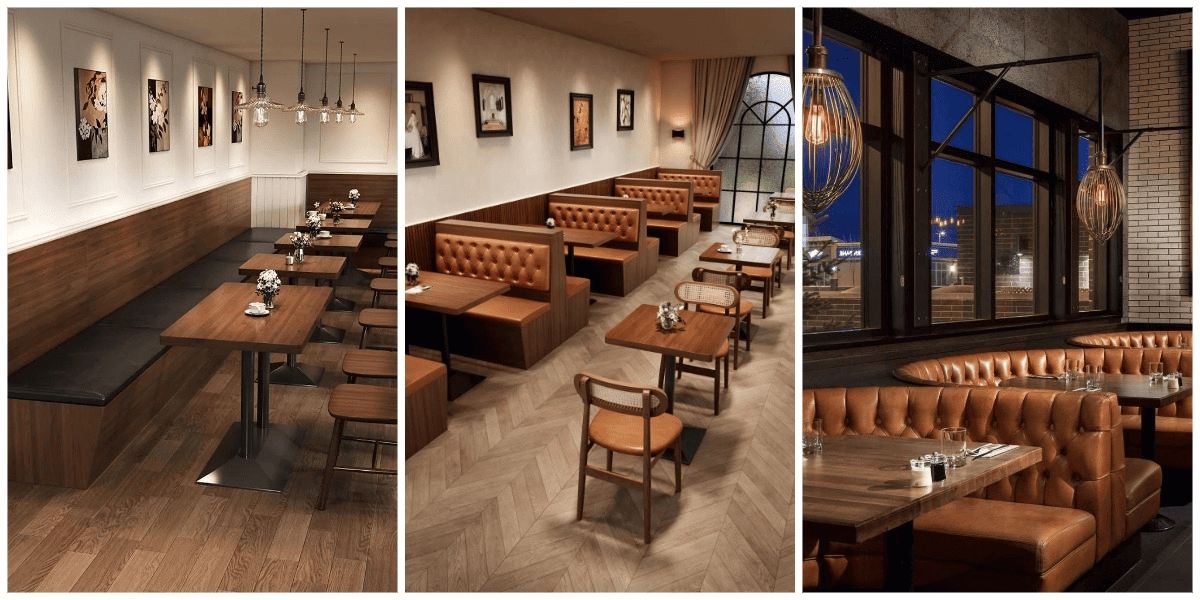
Image: shows three types of banquette layouts.
3.Standard Banquette Seating Dimensions
Depth: Typically 400–500 mm, with seat depth around 450–500 mm.
Height: The height typically ranges between 700 and 750 mm, matching the height of dining tables, while the backrest height generally measures between 900 mm and 1000mm
Bench Length: Length depends on available space. Each segment should comfortably fit 2–3 people, with recommended lengths between 1200–1600 mm. The banquette length is often 10–20 cm longer than the table.
Space Allowance:
Between banquettes: leave about 150 mm
Between banquette and table: typically 100 mm
These dimensions may vary depending on the layout, design style, and guest needs. For high-end restaurants, we recommend custom sizing to achieve the best dining experience.
Our factory supports full customization based on your layout drawings and site dimensions.
4. Common Types of Banquette Seating
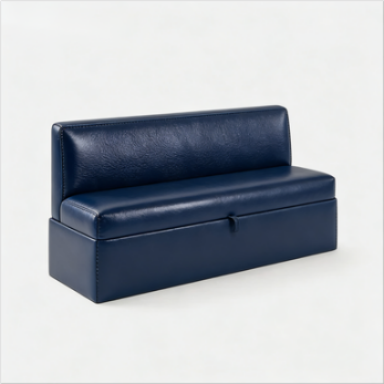
Plain Back
The simplest design which is the most cost effective.
Very easy to clean and no areas that will trap crumbs.
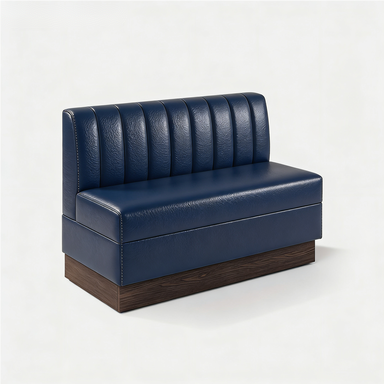
Fluted Back
A fluted back is an elegant effect that adds interest to the banquette.
We offer two different flute variations, the Lux fluting, pictured here and standard fluting.
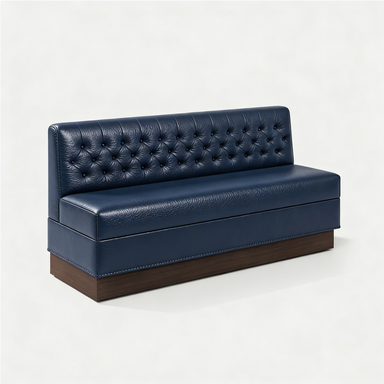
Deep Buttoned
Deep buttoned upholstery is a traditional technique that involves creating
deep tufts by pulling fabric or leather through layers of padding or foam.
This method of upholstery adds a classic and luxurious look to the space.
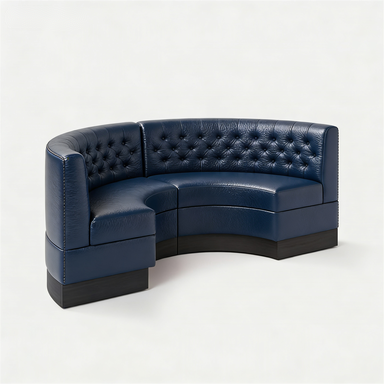
Semi Circle
Circular banquette seating offers a unique arrangement
in a space with curves that encourage conversation amongst guests.
5. Custom Banquette Base & Capping Solutions
From a hotel furniture manufacturing and maintenance perspective, banquette seating is typically raised off the floor to reduce damage from foot traffic and cleaning equipment. The base and capping can be fully customized to suit layout, design intent, and operational needs.
Base Options
Plinth (Box) Base
Constructed from solid timber, plywood, laminate, or upholstered box structures. Plinth bases provide excellent stability, are cost-effective for large hotel projects, and are easy to clean and maintain. They can also integrate power outlets or data ports, making them ideal for hotel restaurants and lounge areas.
Leg Base
Leg bases create a lighter, more open visual effect and are commonly used in modern or lifestyle-focused interiors. Available in wood or metal finishes, they enhance spatial openness but require more effort for floor cleaning and precise structural engineering to ensure long-term durability.
Capping (Edge Protection)
Capping is installed along the top edge of the banquette backrest and serves both protective and functional purposes. Common materials include wood, metal, and high-pressure laminate.
Capping helps protect high-wear edges, simplifies cleaning, and improves safety with smooth, rounded detailing. Wider capping profiles can also function as a narrow display shelf or integrate power outlets and USB charging, enhancing usability in contemporary hotel spaces.
By offering customizable base structures and capping details, banquette seating can be tailored to meet design aesthetics, operational demands, and long-term performance requirements across different hotel projects.
6. Safety and Compliance
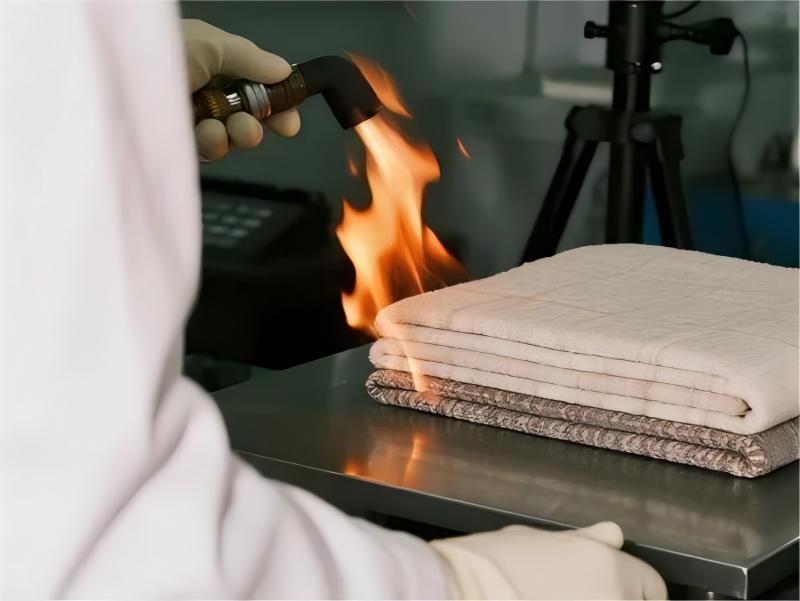
Hotels must ensure all furniture complies with safety and fire regulations.
Key standards to consider include:
BS 5852 or CAL 117 fire-retardant certification for foam and upholstery
Smooth, rounded edges to reduce injury risk
Stable base construction designed for daily high-intensity use
Working with an experienced hotel furniture manufacturer ensures that banquette seating meets all hospitality-grade safety standards without compromising design quality.
7. Cultural and Design Value of Banquette Seating
In hotel and high-end restaurant design, banquette seating extends beyond function. It influences social interaction, shapes spatial behavior, and reinforces brand identity.
By creating semi-private zones within open layouts—through backrest height, upholstery thickness, and layout configuration—banquettes balance privacy and openness. This makes guests feel comfortable and relaxed without isolating them from the surrounding environment.
Banquettes are often perceived as premium seating. Their fixed position, enhanced comfort, and visual presence naturally elevate the dining experience and encourage guests to linger longer. Unlike loose chairs, banquettes support a slower dining rhythm and experience-driven hospitality concepts.
As a result, custom banquette seating has evolved into a cultural symbol within modern hotel design, integrating comfort, social connection, and spatial storytelling into the FF&E system.
Conclusion
Banquette seating is more than a furniture choice. In hotel and high-end restaurant projects, it functions as an architectural element and an emotional anchor that shapes how guests experience the space. From intimate dining corners to statement restaurant interiors, well-designed custom banquettes balance creativity, comfort, and brand storytelling.
By prioritizing ergonomics, durable materials, and precise craftsmanship, hotels can achieve interiors that age well, leave lasting impressions on guests, and simplify long-term operations.
For hotel owners, designers, and contractors seeking refined, durable, and fully customized banquette seating solutions, working directly with an experienced hotel furniture manufacturer ensures design intent, production quality, and project performance are aligned from concept to deliver